A patient told me recently that three different dentists had told her she needed a root canal, and she kept canceling the appointment. Something about it felt wrong, but she didn't know enough to push back. I hear some version of this constantly. So let's give her, and you, the thing that actually helps: better information.
Root canals may be the most emotionally charged procedure in all of dentistry. Search the topic online and you'll find two camps shouting past each other, one insisting root canals are perfectly fine, the other insisting they're "toxic" and quietly making people sick. As usual, the truth is more interesting than either side, and it's moving fast.
First, let's clear the air honestly
You've probably seen the claim that root canals cause cancer or chronic disease. I'm a biological dentist, and I'm going to be straight with you: that claim isn't supported by current science. It traces back to "focal infection theory" and the century-old work of Weston Price, research that modern studies, using methods Price didn't have, have not been able to validate. A properly performed root canal is widely considered safe, and it is almost always far better than leaving an active, untreated infection in your jaw.
I tell you this because fear is a terrible reason to refuse needed care, and because trust is built on accuracy, not alarm. If a tooth has a dangerous infection, treating it matters. Full stop.
Why biological dentists think about it differently
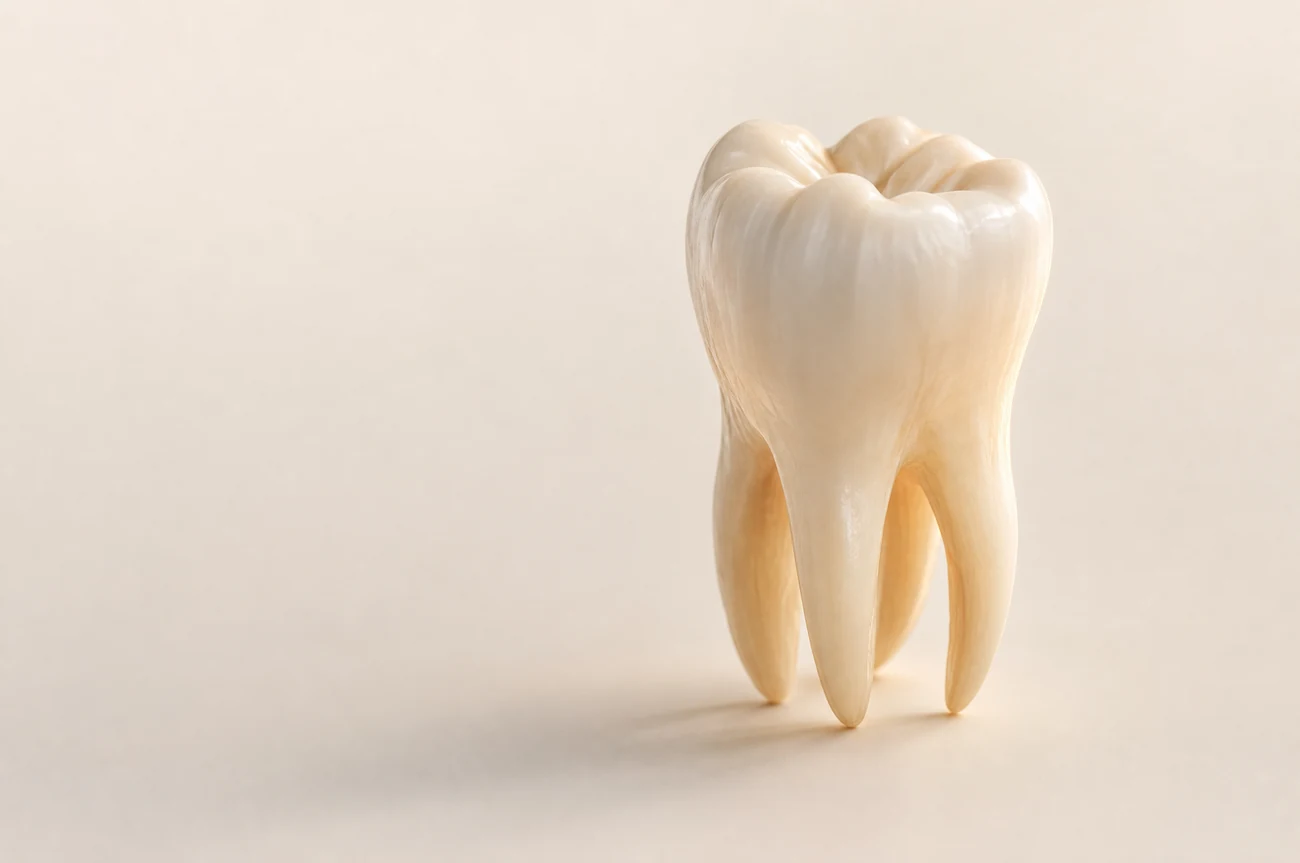
Here's where the nuance lives. A root canal removes the living tissue, the pulp, from inside a tooth, leaving the structure behind but no longer vital. It's a good solution to a real problem. But it's a solution to a tooth that has already reached a crisis point.
The biological philosophy starts one step earlier and asks: did we have to get here? And if we're here, is full removal of the pulp truly the only option, or could this tooth heal? That mindset, preserve vitality whenever the biology allows, is exactly where the most exciting research in dentistry is pointing right now.
What's genuinely changing in 2025
For decades, the endodontic playbook was essentially "if the pulp is compromised, remove it." That's beginning to shift toward "if the pulp is compromised, can we help it recover?" Two related fields are driving this:
Vital pulp therapy
When the pulp is inflamed but not yet dead, modern bioactive materials may allow it to settle down and heal, preserving the tooth's living tissue instead of hollowing it out. In carefully selected cases, this can mean keeping a tooth vital that, a generation ago, would have automatically gotten a root canal.
Regenerative endodontics
This is the frontier. Researchers are working on ways to coax damaged pulp tissue to regenerate using the body's own biological signals, stem cells, and materials like platelet-rich fibrin (PRF), the same kind of autologous, "work with the body" approach we already use in biological extractions. In 2025, studies explored novel agents (including nanosponge-based and advanced irrigation approaches) aimed at calming inflammation and helping pulp tissue recover, and clinical trials are actively testing PRF in regenerative endodontic therapy. The throughline: in many cases, given the right environment, the tooth may be able to do more of the healing itself.
This is early science, not a finished product, and I'll always tell you where the evidence is solid versus emerging. But the direction is unmistakable, and it rhymes with everything biological dentistry has been saying for years: support the body's intelligence instead of routing around it.
What this means for you
If you've been told you need a root canal
You don't need to panic, and you don't need to refuse care out of fear. You need a clear answer to one question: is this tooth truly non-vital, or is there a chance to save its living tissue? That's worth asking out loud.
A few things I'd encourage:
- Get clarity on the diagnosis. Is the nerve definitively dead, or inflamed but potentially salvageable? Those lead to very different paths.
- Ask about preservation options. Depending on the situation, that might include vital pulp therapy, ozone to support a clean environment, or a conservative biomimetic restoration rather than going straight to the most invasive option.
- If a root canal truly is the right call, that's okay. Sometimes it is. A treated tooth beats an infected one.
- If a tooth genuinely can't be saved, ask about a biological extraction with PRF and a biocompatible replacement like a ceramic implant, rather than leaving a problem behind.
- A second opinion is reasonable, not rude. Any dentist worth seeing will welcome it.
Prevention is still the real win, catching decay early enough that none of this is necessary is the whole point of root canal prevention. But when you're already at the crossroads, the goal isn't fear. It's the right question, asked early enough to matter. Always learning. Always questioning. Always exploring.