We've built our entire healthcare system around the idea that the mouth is somehow separate from the body. You see a dentist for your teeth and a doctor for everything else, and the two rarely talk. It's a strange arrangement when you think about it. Your mouth never got the memo that it's supposed to stay in its own lane.
For years, "the mouth-body connection" was treated as a soft, holistic talking point, nice in theory, light on proof. That's changing fast. Some of the most interesting microbiology being published right now is about exactly this: how the community of microbes in your mouth communicates with, and influences, the rest of you.
Start with a reframe
Most people think a healthy mouth is a clean, near-sterile one, the fewer bacteria, the better. That instinct is understandable, and it's also not quite right.
Your mouth is home to the second most diverse microbial community in your entire body, after the gut. A healthy mouth isn't sterile. It's balanced. Hundreds of species coexist in a working ecosystem. Health isn't the absence of bacteria; it's the right bacteria in the right proportions. When that balance tips, a state researchers call dysbiosis. That's when trouble tends to start.
The "oral-gut axis": what the 2025 research is showing
Here's where it gets genuinely fascinating. Researchers increasingly describe an oral-gut axis: the microbial communities in your mouth and your gut are not isolated. They talk to each other and shape one another.
The mechanisms being mapped out include a few distinct routes. Certain oral bacteria, names like Porphyromonas gingivalis and Fusobacterium nucleatum that come up in gum disease, can travel from the mouth to the gut, a process called translocation. They can also influence the body indirectly, through the metabolites they produce and through immune signaling. When the oral ecosystem is out of balance, that imbalance doesn't necessarily stay put.
I want to be careful and precise here, because this is exactly where health writing tends to overreach. The current research describes associations and plausible mechanisms, oral dysbiosis has been associated with systemic inflammation and a range of conditions, and scientists are still working out cause and effect. Association is not the same as causation, and I won't pretend the science is more settled than it is. But the direction of all this evidence is consistent, and it's pointing at something biological dentists have long suspected: the mouth is not a separate country.
Why this shapes how I practice
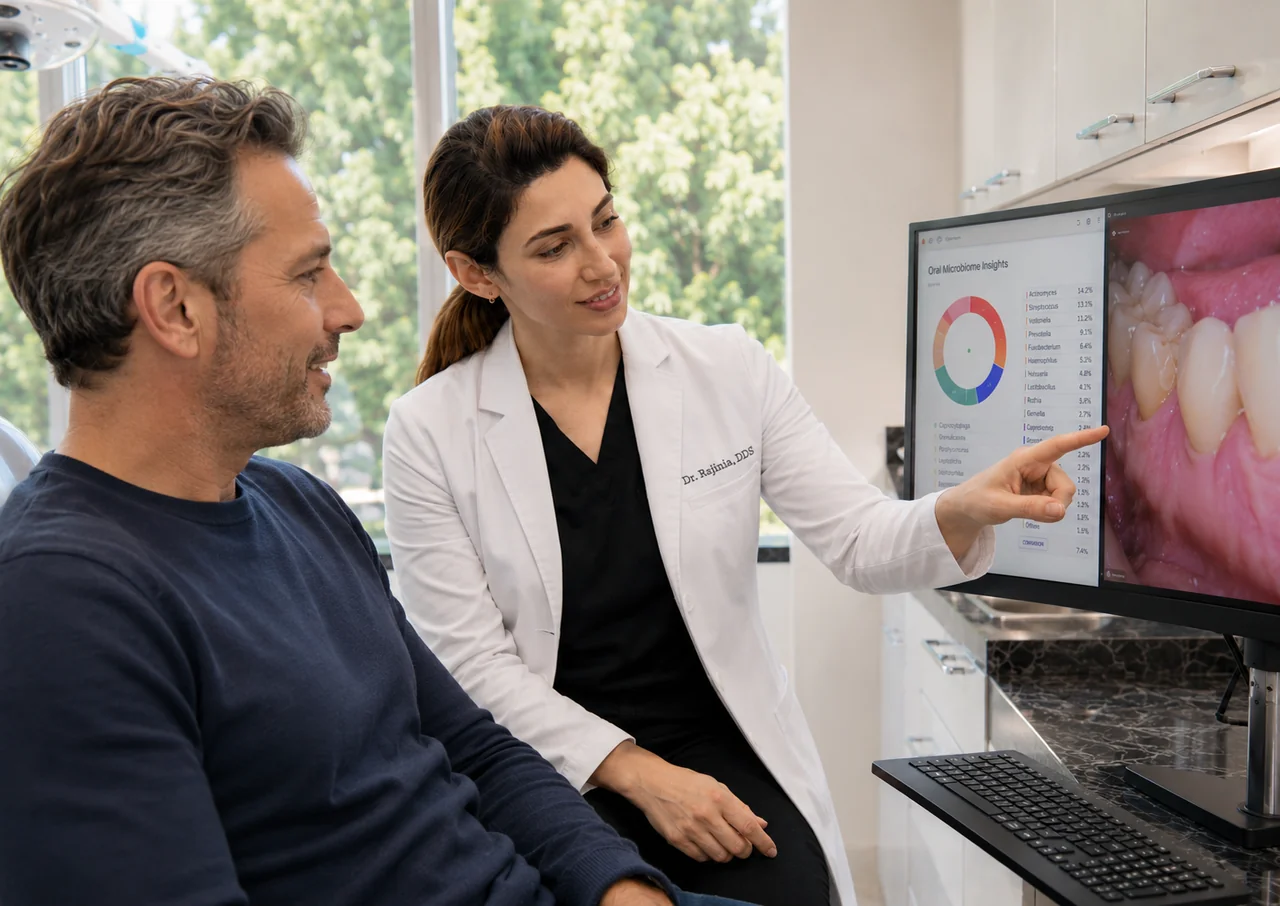
This is the science underneath the whole biological approach, the reason a first visit with me might include questions about your sleep, your digestion, your energy, and your diet, not just your teeth. The mouth is a window into the rest of the body, and what's happening at your gum line is often part of a larger story.
It also changes the goal of care. If health is about ecological balance rather than sterility, then carpet-bombing your mouth with harsh antiseptics every day can be counterproductive. You can disrupt the good with the bad. The biological aim is to support a healthy ecosystem: protecting healthy saliva, using targeted tools like ozone thoughtfully rather than indiscriminately, paying attention to nutrition, and treating gum inflammation as the meaningful signal it is.
What this means for you
The one habit worth changing
Stop thinking of bleeding gums as just "I should floss more." Bleeding is inflammation, and inflammation is information. It's one of the clearest, earliest whole-body signals your mouth gives you, worth paying attention to, not ignoring.
A few practical takeaways:
- Treat gum health as whole-body health. Gum disease has been associated with several systemic conditions. Caring for your gums is not a cosmetic concern.
- Think ecology, not warfare. The goal isn't to kill everything in your mouth. It's to keep the ecosystem balanced. Be cautious with harsh, daily antimicrobial overuse.
- Let your providers talk to each other. Tell your dentist about gut issues; tell your doctor about your gums. The two are more connected than our scheduling systems admit.
- Support the basics that support the microbiome: real food, healthy saliva (hydration matters), and gentle, consistent biological hygiene rather than aggressive scrubbing and sterilizing.
Biological dentistry was never really about rejecting conventional care. It's about asking better questions before reaching for the standard answer, and remembering that the goal has always been the same: help your body heal. We're just finally getting more precise about how. Always learning. Always questioning. Always exploring.